
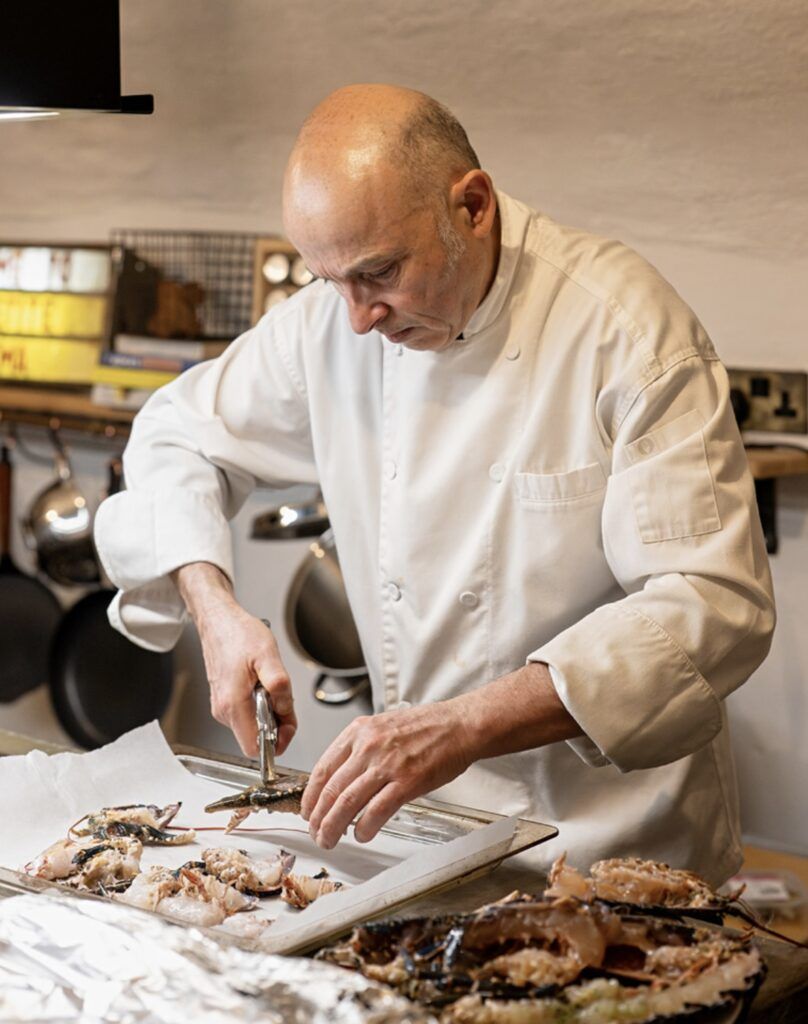
Fresh pasta made in your kitchen means the pasta is mixed, rolled and cut in the house on the day you eat it — not bought, not dried, not brought in ready. I am Giuseppe Manzoli, an Italian-trained private chef, and this is the part of a menu guests most often stand and watch.
At a Glance
- What it is: egg pasta made from scratch in your own kitchen, hours before service.
- Shapes: tagliatelle, ravioli, tortelli and pappardelle, depending on the menu.
- Where: private homes, self-catering houses, lodges and estates across Scotland.
- Also available as: a pasta-making class before dinner, popular with hen parties and family groups.
- Price: menus from £75 per person, VAT and travel included.
- Chef: Giuseppe Manzoli — 35+ years cooking professionally, trained in Italy, 220+ five-star Google reviews, cooked for the First Minister of Scotland in 2024.
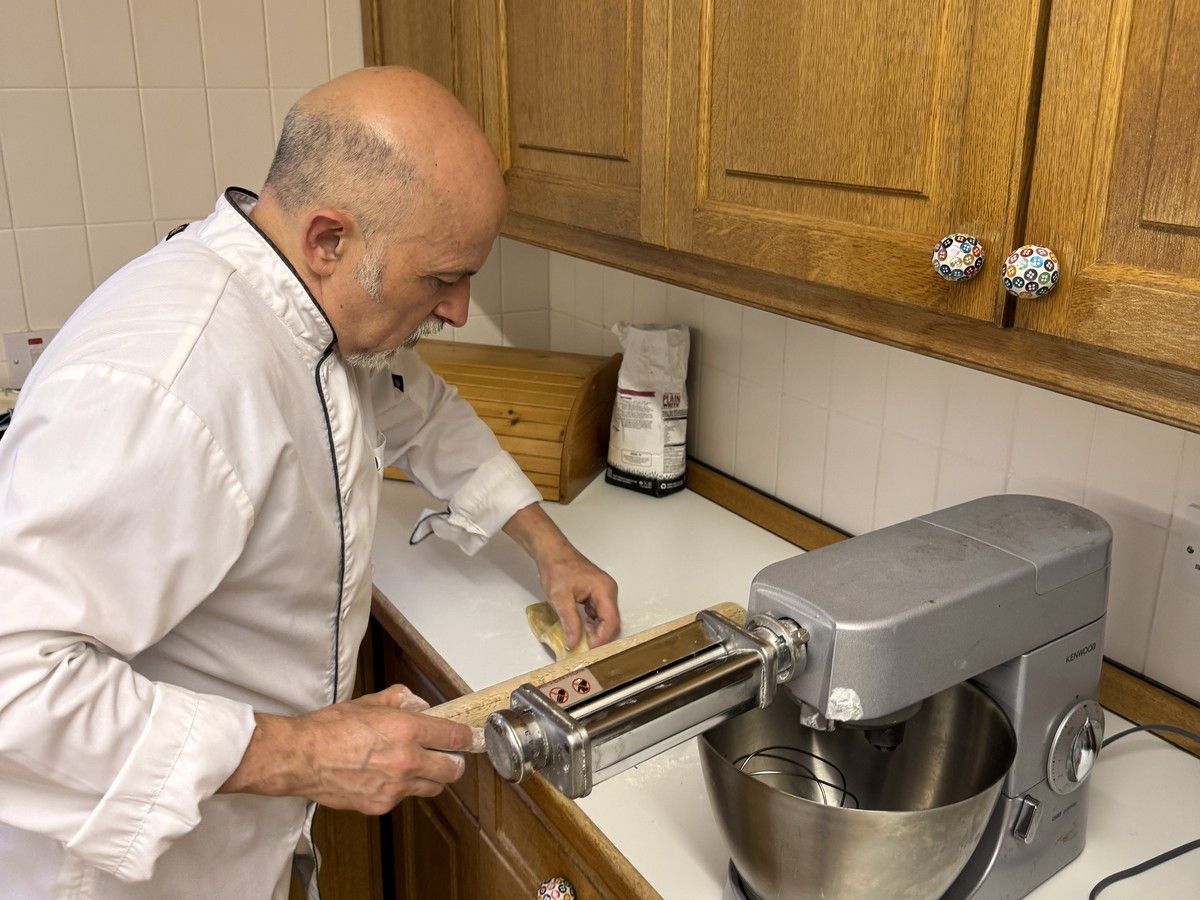
Yes — the pasta is made in your kitchen, on the day, a few hours before you eat it. Flour, eggs, a machine that travels in the back of the car. Nothing arrives pre-made.
This is the part of what I do that people find hardest to believe, and the easiest to prove. You can fake a lot of things in a private kitchen. You cannot fake dough.
Why This Is Not a Gimmick
I am from Modena, in Emilia-Romagna. Fresh egg pasta there is not a menu item or a special occasion — it is what pasta means. Tortellini, tagliatelle, ravioli. Made at home, rolled thin, cooked in minutes.
When I moved to Scotland I kept doing it the same way, which turns out to be unusual here. Most private chefs cannot make pasta, and most who say they serve fresh pasta mean they bought it fresh.
That is not a criticism — it is a hard skill to carry into someone else’s kitchen. It is just worth knowing the difference when you are comparing quotes.
What Actually Travels With Me
- A pasta machine and the roller attachments
- A wooden rolling pin, for the shapes a machine cannot do
- Flour, weighed for the booking
- Eggs
- My own knives
That is the whole kit. Fresh pasta needs almost nothing except technique and time, which is exactly why it is such a good test of both.
Why Pasta Made Three Hours Ago Is a Different Thing
Dried pasta is a fine ingredient and I am not against it. But fresh egg pasta is not dried pasta plus water — it is a different material.
It cooks in ninety seconds rather than eleven minutes. It holds sauce instead of shedding it, because the surface is porous rather than sealed. And it has a texture — a slight resistance and then nothing — that only exists in a narrow window after it is made.
Fresh pasta bought on Tuesday and eaten on Saturday has already lost most of that. Pasta rolled at four and eaten at seven has all of it.
What Works for a Group, and What Does Not
Not every shape suits a private dinner, and this is a practical constraint rather than a preference.
Works well for a table of ten or more: filled shapes — ravioli, tortelli, agnolotti. They can be made and held in the afternoon, then cooked in a couple of minutes at service. Tagliatelle and pappardelle also work, cut late and cooked to order.
Harder: anything that must be shaped at the last second, or where the sauce needs finishing per plate for a large number. Not impossible — just something to plan around rather than discover on the night.
For a recent dinner at a country house near Stirling I made filled pasta by hand on the worktop through the afternoon, cut it one piece at a time, and cooked it to order at service.
Dietary Requirements: What Changes and What Cannot
Vegetarian and vegan fillings are straightforward. Egg-free pasta is straightforward, using semolina and water, which is how much of southern Italy makes it anyway.
Gluten-free fresh pasta is where I will be honest with you. It can be made and it can be good, but it is not the same thing, and any chef who tells you a coeliac guest will not notice is not being straight. What I do instead is build that guest a course that is genuinely excellent in its own right rather than an imitation of everyone else’s.
Booking a Fresh Pasta Menu
It suits almost any occasion — celebration dinners, self-catering stays, weddings, family gatherings. It is the course guests talk about afterwards, partly because of how it tastes and partly because they watched it being made.
I cook across Scotland: the Highlands, Wester Ross, Argyll, Perthshire, Stirling, Angus, Fife, Edinburgh and beyond. Menu, produce, cooking, service and clearing down are included in one price agreed in advance.
👉 [CHECK AVAILABILITY FOR YOUR DATES →]
Questions About Fresh Pasta at a Private Dinner
Do you really make the pasta in our kitchen?
Yes. The machine and the ingredients travel with me and the dough is made on site on the day.
Does it need a special kitchen?
No. It needs a clear worktop and a large pan of boiling water. I have made pasta in holiday cottage kitchens and in estate lodges with equal success.
Can guests watch, or join in?
Often, yes, and people frequently ask. It is worth mentioning when you book so the timing allows for it.
How long before dinner do you make it?
Usually mid to late afternoon for an evening service. Filled shapes are made first, long shapes cut closer to the time.
What sauces do you serve with it?
Whatever suits the filling and the season, built around your menu. The rule I work to is that the sauce serves the pasta, not the other way round.
If you are planning something similar, my full guide to private chef dining in Scottish self-catering houses, lodges and holiday cottages explains how an evening works, what it costs and what I need from the kitchen.
Ready to check your date? See pricing and get in touch here.
Fresh pasta is one of many things I cook to order in a self-catering kitchen — see my guide to hiring a private chef in Scotland for how it all works.